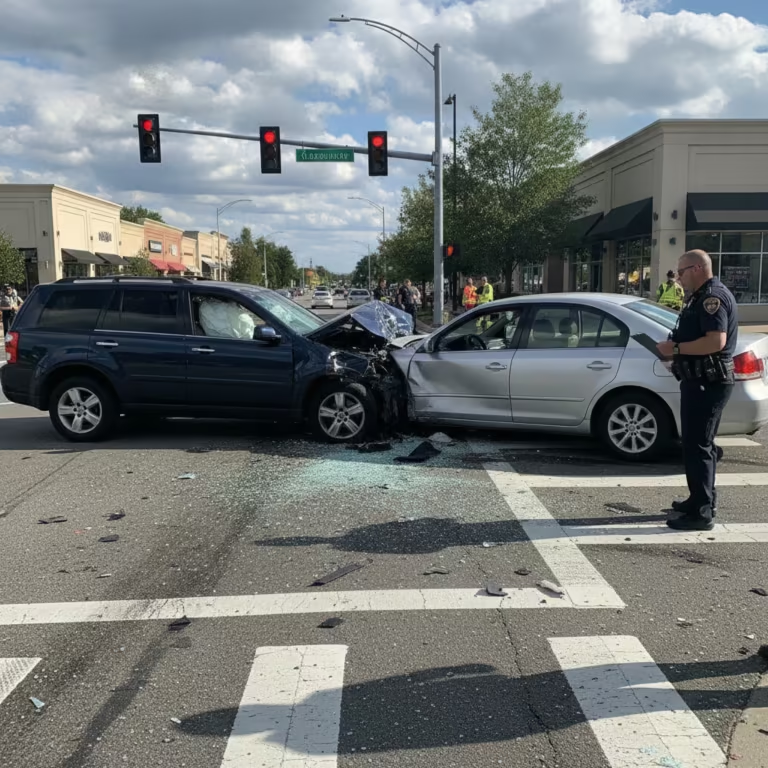
When it comes to car accidents in Phoenix, determining fault isn't always straightforward. While Arizona law requires drivers to exercise reasonable care on the road (A.R.S. § 28-701(A)), there's an important legal principle many drivers don't know about: the Sudden Emergency Doctrine. This doctrine can significantly impact your car accident case, especially given Phoenix's unique weather challenges.
What Is the Sudden Emergency Doctrine?
The Sudden Emergency Doctrine recognizes that drivers faced with a sudden, unexpected emergency shouldn't be held to the same standard of care as someone driving under normal conditions. In legal terms, while drivers must still act reasonably, the "reasonable" standard takes into account the emergency situation they face.
Examples of Sudden Emergencies in Phoenix:
- Sudden dust storms (haboobs) on I-10 or I-17
- Unexpected flash flooding during monsoon season
- Debris falling from trucks on the Loop 101
- Animals darting onto the road in areas like North Phoenix
- Sudden mechanical failures
- Medical emergencies while driving
How Does the Doctrine Work in Practice?
Consider this scenario: You're driving on the I-17 when a massive dust storm appears suddenly. Visibility drops to near zero. You slow down but still collide with another vehicle. Under normal circumstances, rear-ending another vehicle almost always puts you at fault. However, the Sudden Emergency Doctrine might reduce or eliminate your liability if you can prove:
- You faced a genuine emergency situation
- You didn't contribute to creating the emergency
- You acted reasonably given the circumstances
The Doctrine's Limitations
It's crucial to understand that the Sudden Emergency Doctrine isn't a get-out-of-jail-free card. Arizona courts have placed several important limitations on its use:
1. The Emergency Must Be Genuine and Unexpected
- A dust storm that develops gradually doesn't qualify
- Regular rush hour traffic isn't an emergency
- Predictable weather conditions don't count
2. You Must Have Had No Time to Deliberate
The doctrine applies only when you had to make split-second decisions. If you had time to consider various courses of action, the doctrine likely won't apply.
3. Your Actions Must Still Be Reasonable
Even in an emergency, you must act with some degree of care. Completely reckless reactions won't be protected.
Weather-Related Considerations in Phoenix
Arizona's unique weather patterns make the Sudden Emergency Doctrine particularly relevant. Our state's courts have specifically addressed how weather conditions affect the doctrine's application:
Dust Storms
- Courts recognize that even experienced Phoenix drivers can be caught off guard by sudden dust storms
- Following dust storm safety protocols (pulling over, turning off lights) can help prove reasonable behavior
- The doctrine may not apply if you were aware of dust storm warnings but chose to drive anyway
Monsoon Conditions
- Flash flooding can qualify as a sudden emergency
- Hydroplaning incidents may be covered if the water accumulation was sudden and unexpected
- Regular rainfall typically doesn't qualify as an emergency
Impact on Insurance Claims
Understanding how the Sudden Emergency Doctrine affects insurance claims is crucial:
- Insurance adjusters may initially resist applying the doctrine
- Documentation of weather conditions and emergency circumstances is vital
- Witness statements about the sudden nature of the emergency are particularly valuable
- Expert testimony may be needed to establish the reasonableness of your actions
How an Attorney Can Help
Proving the applicability of the Sudden Emergency Doctrine requires:
- Thorough investigation of weather conditions
- Collection of witness statements
- Analysis of traffic camera footage
- Expert testimony when necessary
- Understanding of relevant Arizona case law
- Knowledge of local weather patterns and road conditions
Protecting Your Rights
If you've been involved in an accident involving a sudden emergency:
- Document everything immediately
- Take photos of weather conditions if possible
- Get contact information from witnesses
- Don't admit fault at the scene
- Contact an experienced attorney who understands Arizona's Sudden Emergency Doctrine
The Role of A.R.S. § 28-701(A)
Arizona's basic speed law (A.R.S. § 28-701(A)) requires drivers to maintain a "reasonable and prudent" speed given the conditions. This statute interacts with the Sudden Emergency Doctrine in important ways:
- You must already be following this law when the emergency occurs
- Your pre-emergency speed may affect whether the doctrine applies
- The statute helps define what constitutes "reasonable" behavior during an emergency
Contact Thomas Law PLLC
Understanding how the Sudden Emergency Doctrine applies to your case requires experienced legal analysis. At Thomas Law PLLC, we have extensive experience handling complex car accident cases involving sudden emergencies in Phoenix. Our deep knowledge of local weather patterns, road conditions, and Arizona law allows us to effectively argue for the doctrine's application when appropriate.
Contact us today for a free consultation to discuss your case and understand your legal options. Remember, in Arizona you generally have two years from the date of the accident to file a claim, but evidence supporting the Sudden Emergency Doctrine may become harder to gather as time passes.

Personal injury accidents can leave people feeling overwhelmed, uncertain, and unsure of what steps to take next. Acting quickly and having the right guidance is essential for protecting your rights. With timely decisions and informed support, injury victims can better navigate the complex process of pursuing compensation. It can be difficult understanding personal injury claims and your legal options.
A prompt response after an accident helps preserve crucial details, strengthens your claim, and allows you to seek the legal services needed to move forward with confidence.
The Importance of Acting Quickly After an Injury
Reaching out to legal support soon after an accident is one of the most effective ways to safeguard your rights. Memories fade, evidence can become harder to obtain, and speaking too freely with insurance claims adjusters may unintentionally harm your case. Taking early steps ensures your recollection of events is clear and strengthens your position under Arizona law.
The Role of a Personal Injury Attorney
Working with an experienced Scottsdale attorney or Phoenix lawyer can significantly increase the likelihood of obtaining fair compensation. Legal professionals trained in personal injury law understand how to evaluate the true value of a claim, negotiate effectively, and identify the factors that can influence your recovery. Their knowledge becomes especially valuable when calculating damages or responding to complex case stages.
Navigating Insurance Company Interactions
Insurance companies may present documents or request statements that are not always in your best interest. Without legal guidance, it is easy to settle for far less than you deserve. Seeking advice before signing anything helps ensure your rights are fully protected and prevents missteps that could weaken your case.
Understanding the Duration and Complexity of Injury Cases
Some personal injury cases resolve quickly, while others require more time due to medical evaluations, investigations, or civil litigation developments. Remember that the other person’s insurance is not looking out for your interest. Having steady legal representation ensures that every detail is managed properly, even when the process becomes lengthy or complicated. An attorney equipped to handle challenges—especially one with experience as a pro tem judge—can provide reassurance and clarity throughout your matter.
With professional support, injury victims can avoid common pitfalls and better protect their interests. Acting early, staying informed, and working closely with legal counsel can make a meaningful difference in the outcome of your case. Those affected by an accident should consider speaking with a personal injury attorney promptly to explore their options, safeguard their rights, and pursue the compensation they may be entitled to.